

The Persistent 4%: Michael Greer on Giving USA 2026 and Arts Philanthropy
In this conversation, Michael Greer, President & CEO of ArtsFund, reflects on the 2026 Giving USA report, what philanthropy trends mean for arts and culture organizations and why the sector’s future may depend less on raising more money and more on changing how that money is deployed.
The 2026 Giving USA Report on Philanthropy reported that Americans contributed a record $617.2 billion to charitable causes in 2025. Arts, culture and humanities organizations received roughly 4% of those contributions – a share that has remained remarkably consistent for decades. What does that stability tell us about philanthropy’s relationship with the arts? And what should arts fundraisers take away from a moment marked by rising costs, shifting audience behavior, and ongoing uncertainty?
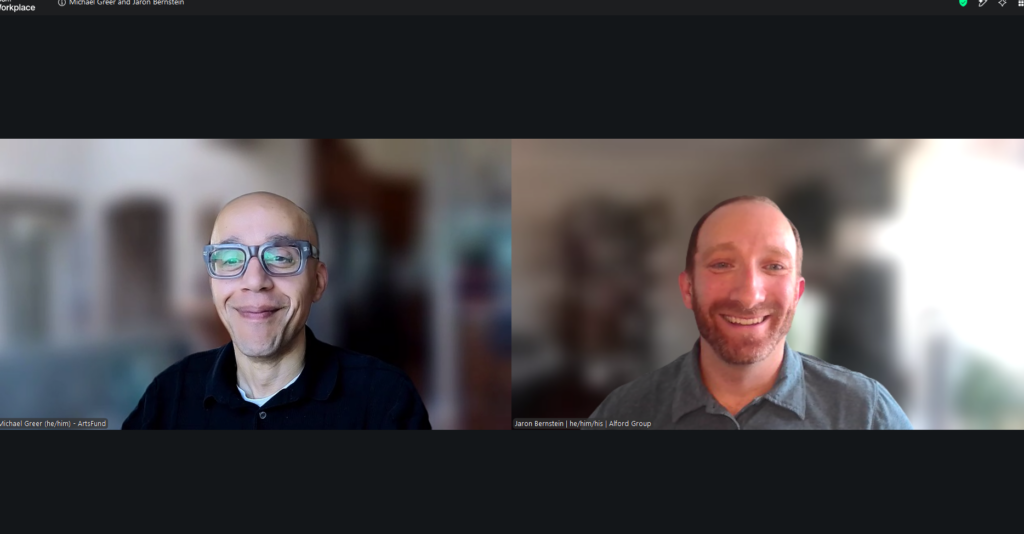
Alford Group’s Senior Consultant Jaron Bernstein sat down with Michael Greer of ArtsFund to discuss what stood out to him in the Giving USA report, what ArtsFund’s own research is revealing in Washington State and why he believes funders need to create space for experimentation if they truly want nonprofit arts organizations to evolve.
Arts, culture and humanities organization received about 4% of all charitable giving in 2025, which is consistent with what we’ve seen for decades. What stood out to you when you looked at this year’s Giving USA report?
I love that 4% number. We see it every year. For those of us who have been following this report for some time, it’s almost to be expected. Since the 1980s, that number has been 4%.
Would we like it to be higher? Of course. But I actually think it points to something far more positive. There is a consistent level of acknowledgement for the value of arts and culture that is irrespective of political party. It’s irrespective of the economic climate. It’s irrespective of the political climate.
There have been wars. There have been severe economic downturns. There was the savings and loan crisis. There was the dot-com boom. There was the housing crisis. There have been Republicans in the White House. There have been Democrats in the White House.
Through it all, every one of those situations and demographics has agreed that there is a consistent need for funding arts and culture in the United States.
The downside is that the agreement seems to be 4%, right? But when you look at the data over longer periods of time, it feels like there is a consistent acknowledgement that this sector is important. As fundraisers and people working in the space, I think it’s important to remember that these short-term fluctuations are, in aggregate, not as meaningful as we sometimes make them out to be.
Does that consistency give you optimism as we move through the largest transfer of wealth in modern history?
The Great Wealth Transfer has already started, and it will continue over the next 20 years or so. But I think it’s important to remember that significant amounts of wealth have been generated and transferred throughout that entire 40-year continuum included in the Giving USA report, as giving to arts organizations has remained at 4%.
I don’t know enough about the underlying data to say exactly how today’s wealth transfer compares with previous generations when adjusted for inflation, housing costs, food costs and all the other things families have to contend with. But what I do know is that for 40 years, it’s been 4%.
So if I’m a betting man, I’m going to say over the next 20 years it’s probably still going to be 4%, maybe give or take a little bit. I think sometimes we get caught up asking whether the wealth transfer is going to the environment, social services or different causes across the political spectrum. The reality is that if history is our guide, we can expect 4% will continue to come to arts and culture.
So don’t be overly optimistic. But I would also say history is telling us not to be overly pessimistic either.

ArtsFund’s State of the Sector report found that revenues for arts organizations in the state of Washington increased between 2019 and 2025, but expenses increased even faster. How do you think about that alongside the Giving USA data?
What I’m hearing anecdotally, both regionally and nationwide, is that costs have outpaced revenue pretty much across the board. I think we’re seeing philanthropy stepping in to do what it can to fill that delta.
The challenge is understanding what the increased philanthropy is actually supporting. The State of the Sector report found that contributed revenue represented 7% more of the revenue mix in 2025 than before the pandemic. If we’re talking about this shift in the balance between earned and contributed revenue across the sector, that can represent tens of millions of additional philanthropic dollars coming online every year just to hold budgets where they already are.
So when you see rises in overall philanthropy, that’s a great thing. But I think part of that increase may simply be covering the status quo of budgets, or even supporting organizations that have reduced budgets. The increases are great, but I think they require us to open the hood a little bit and ask what they’re actually supporting.
How much artistic or programmatic “output” is being produced? How much is supported by earned revenue versus contributed revenue? Because what looks like growth on paper may actually be philanthropy helping organizations absorb rising costs without producing more.
That push and pull between earned and contributed revenue make arts organizations somewhat unique within the nonprofit sector.
One thing I would point out is that earned revenue is up. People are coming back. A good portion of that growth represents a return—or in some places even growth—in audience participation. The proverbial butts in seats are back.
The problem is that expenses have gone up even more.
Nonprofits are designed to provide a service to the community at a price that is not strictly subject to free-market forces, because that service is valuable to everyone in the community. The cost of providing those services has risen at market rates, but we can’t simply pass those costs along to audiences.
So where’s the give? It has to come from the contributed side. We may have more people in the seats than ever before, but in order to create an accessible environment for those people, we need additional philanthropic and public dollars coming in to support access to that critical piece of our communities.
How have changes in federal funding and policy priorities since early 2025 affected arts organizations?
I think there is a blessing and a curse to the relatively small amount of federal funding that nonprofit arts and culture organizations receive.
My personal opinion is that the message was more damaging than the dollars. The dollars were never that great to begin with, especially at the federal level.
But when the message coming from national leadership is that arts and culture are not a priority, that has ripple effects. It sends a message to private funders, corporate America, local arts agencies and others that this is not an area worthy of investment.
The place to look is at the state and local level. According to research on public funding for the arts in 2025 by the National Assembly of State Arts Agencies (NASAA), state and local arts expenditures were down 8.5% from 2024.At the same time, research like our recent collaboration with SMU DataArts, Livability Impact Study of the Arts, keeps pointing in the same direction: state-level arts funding appears to be one of the most important indicators of community health through arts and culture. Yet it remains one of the smallest pieces of the overall funding structure.

Have you seen any particularly successful approaches arts organizations are taking right now?
Instead of pointing to one specific tactic, I’d rather point to something I think we’re missing entirely: innovation capital. It doesn’t exist.
There is zero money available for innovation, and there is zero money available for failure. And that is almost exclusively the fault of funders.
A lot of funding requirements are tied to programmatic outcomes, impact measures, low overhead costs and other things that actually preserve a status quo we already know needs to evolve.
We’re not structuring the capital side of the equation in a way that allows people to invest, fail, take risks and bring innovative talent into the sector.
If you look at high-growth industries, they maintain reserves specifically so they can invest in research and development. They’re willing to fund moonshot ideas that might fail. In arts and culture, we don’t have that equivalent.
Are organizations communicating that need to funders?
Absolutely. ArtsFund holds regular listening sessions with our grantees. Every few months, organizations come in and tell us what’s working, what’s challenging and what they need from funders. And over and over and over again, we hear the same thing: unrestricted multi-year funding. Period. That’s it.
Nobody is being quiet about it. People on the ground have been saying this for years.
As a funder, I believe we need to listen. That’s what trust-based philanthropy really is. There is nothing mysterious about the request.
What advice would you give fundraisers working in the arts sector today?
My advice to fundraisers is to be bold.
- Ask for unrestricted funding.
Programmatic funding is great, but programs don’t live in a vacuum. They exist within organizations
- Make the case for innovation.
Innovation requires flexibility. Boards need flexibility. CEOs need flexibility. Executive directors need flexibility. Other industries allocate 10%, 15%, 20% to research and development, so they can continue exploring and innovating even when there’s a market downturn. The scale is different, but the concept is the same whether you’re a $1 billion tech company or a $1 million arts organization. Make the case for failure
- Make a case for unrestricted multi-year funding.
The case is different for every organization, but advocate concisely and compellingly for multi-year funding. Highlight what that kind of stability will unlock, not just in terms of the status quo, but also in terms of what it will allow your organization to imagine and innovate
There is a case to be made for innovation. There is a case to be made for reserves. There is a case to be made for failure. If funders want arts organizations to change, if they want the sector to change, if they want the model to change, they’ve have got to fund change—not just fund the status quo.
Any final thoughts for arts fundraisers?
Let’s go back to that 4%. History says that regardless of what we do, we’re still getting the same amount of money.
I think in the United States there is a genuine acknowledgement that arts and culture are important. People care about it. It’s been there for 40+ years in Giving USA. It’s probably been there for thousands of years when you think about the ways arts and culture have manifested themselves in human society.
So stay resilient. Stay hopeful. What we do is a Sisyphean task by design. We’re always going to be pushing that boulder up the hill for that 4%. But we’re also creating significant value for our communities. So, keep doing it. Stop every once in a while, take a seat with that boulder behind you and remember that 4%.
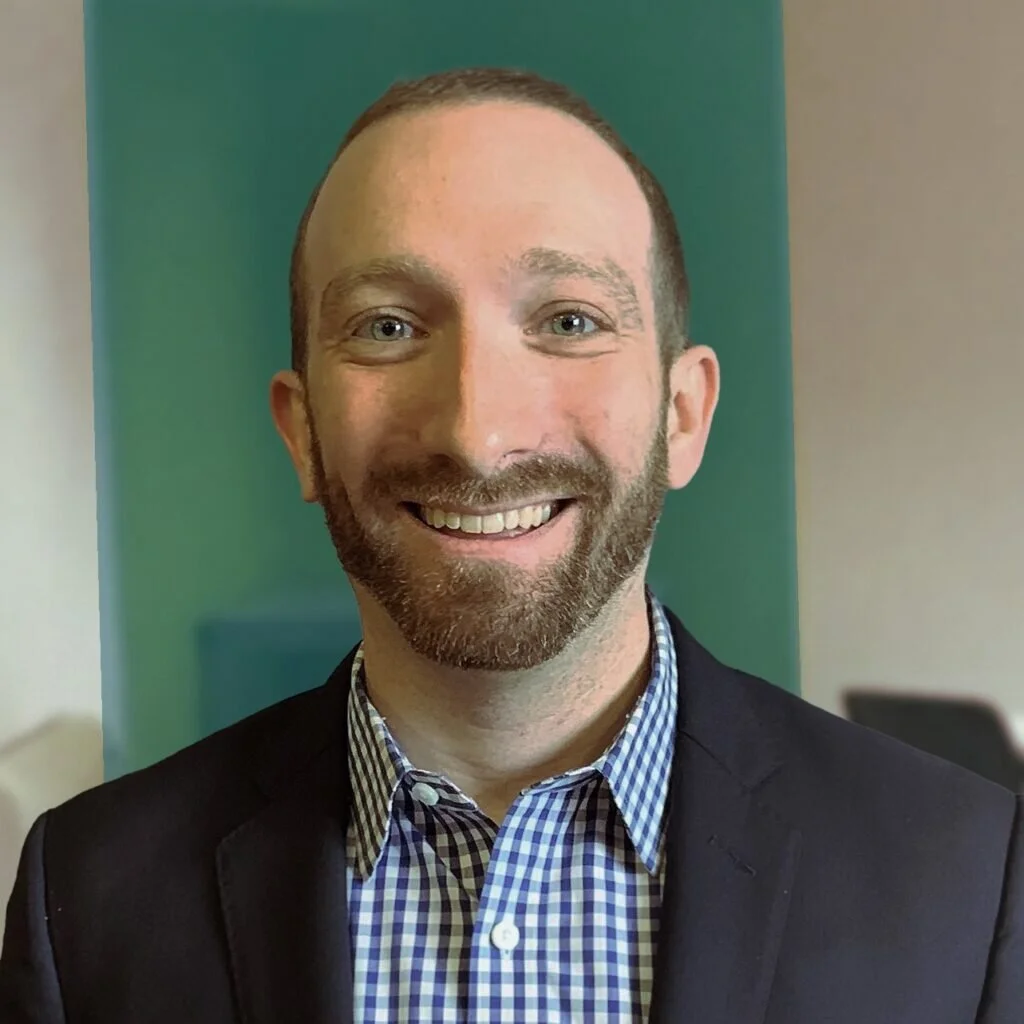
Jaron Bernstein
Senior Consultant, Alford Group
Jaron Bernstein brings 10 years of nonprofit experience with a focus on arts and culture, community development and human services. He helps organizations marry vision with strategy, establish key systems and processes and tell their stories effectively. Outside of work, Jaron is a long-distance runner and founded Chicago’s first Seahawks fan bar group.
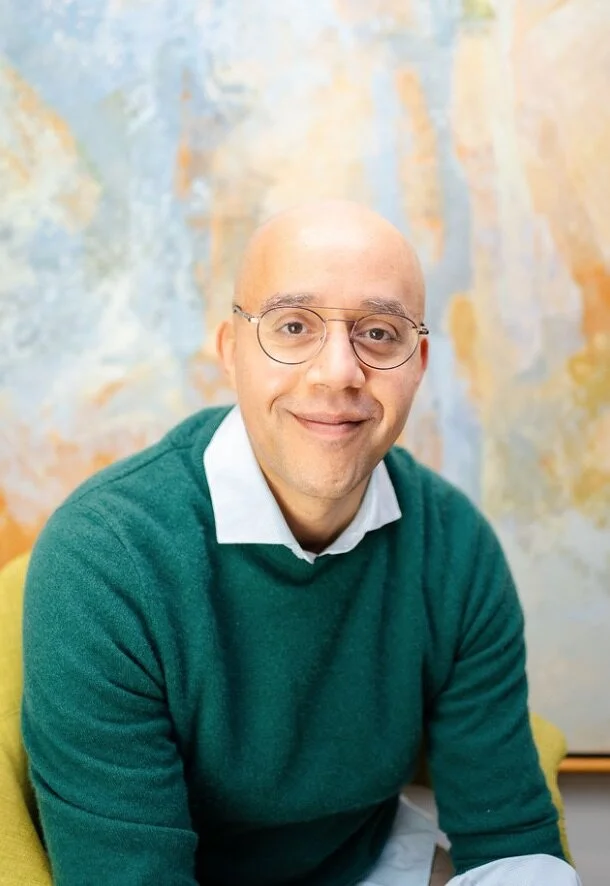
Michael Greer
President & CEO, ArtsFund
As a relationship builder, thought leader, and strategic planner, Michael brings three decades of experience in nonprofit and for-profit leadership to ArtsFund, supporting the mission to support the arts through leadership, advocacy, and grantmaking in order to build a healthy, equitable, and creative Washington. With degrees in economics, education, and an M.B.A. from The Wharton School, Michael brings a diverse skill set to the role and a unique perspective on the challenges and opportunities of the sector.
Michael has professional experience in the U.S.A., India, and mainland China, is a U.S. State Department Gilman scholar, a Wharton Fellow, and a Wharton ESG Initiative Bendheim fellow. In addition, he is a dedicated community partner, serving on several boards, including the Seattle Regional Chamber of Commerce, Downtown Seattle Association, SMU DataArts, Disability Philanthropy Forum, and United Way of King County.