

Learning Forward: Reflections on Professional Development
What Professional Development Actually is
Professional development, to me, is a constant pursuit of bettering yourself, not as a milestone to reach but as an ongoing commitment to growth. It’s making sure you’re able to perform at your best for the people and organizations you serve, while staying attuned to a world that doesn’t hold still. New generations bring new values. New technologies change what’s possible. New research challenges what we thought we knew. Recognizing that change is inevitable and choosing to grow alongside it rather than be left behind by it, is, I think, what separates good practitioners from great ones.
I’ve been thinking about this a lot as I start my journey at Alford Group, consulting with nonprofit organizations at the intersection of strategy, fundraising and leadership. It’s a role that brings together everything I’ve been building toward: AmeriCorps work with Habitat for Humanity of Laramie County, where I first understood how much business fluency matters in mission-driven organizations; an MBA that gave me the tools to act on that understanding; and a consulting internship that showed me this was the work I wanted to do. Each of those experiences was a form of professional development, not always formal, not always comfortable, but always moving me forward.
The Compounding Value of Staying in the Room
One of the things I’ve come to appreciate is that professional development isn’t just about accumulating knowledge. It’s about staying connected to the people and conversations that keep your thinking sharp and your perspective current.
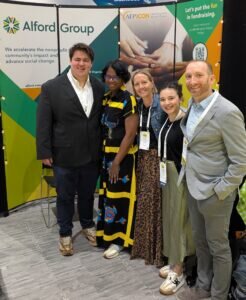
AFP ICON 2026 – Left to Right: Kaden Buck, Brenda Asare, Alexis Cooke, Frances Jacobson, Jaron Bernstein
This spring I attended Association of Fundraising Professionals (AFP) ICON, the world’s premier fundraising conference. What struck me most wasn’t any single session. It was the experience of being in a room full of people deeply invested in the same questions I am. Fundraising professionals, nonprofit leaders, researchers, consultants, people at every career stage, all wrestling with how to build sustainable organizations and meaningful donor relationships. Starting to introduce myself into that community, having those conversations, beginning to find my footing among people who will be my peers and colleagues for years to come, that was its own education.
What also stood out was how many sessions were centered on AI. Not reluctantly, not skeptically, but with genuine curiosity and intent. The sector was collectively leaning into a new technology, choosing to understand and leverage it rather than wait on the sidelines. That, to me, is professional development as a culture. It’s an entire community deciding that something new matters enough to learn about it, because the alternative, ignoring it until it’s no longer new, isn’t really an option.
Professional development does that. It places you in the community, and it keeps that community moving forward together.
When the Evidence Challenges What You Thought You Knew
Staying current isn’t just about being aware of new trends; it’s about being willing to have your assumptions challenged. That’s the harder part.
At AFP ICON, I attended a session called Good, Better, Proven: What Research Tells Us About Fundraising That Works, grounded in philanthropic psychology and behavioral economics. Coming from years of working alongside nonprofits, I thought I had a reasonable grasp on how fundraising worked. What I hadn’t reckoned with was the gap between common practice and proven practice. A lot of what organizations do, not out of negligence, but out of habit and convention, isn’t well supported by research. Seeing that made explicit, backed by evidence rather than opinion, reframed something I thought I understood.
That kind of reframing is uncomfortable in the best way. It’s also exactly what professional development is for. Not to confirm what you already believe, but to surface what you don’t yet know and give you something better to work with.
Watching the Landscape Shift
Another thread I found myself turning over throughout ICON was the question of next-generation giving, how policy changes, economic conditions and evolving values are reshaping who gives, how much and what moves them to do so.
It’s a genuinely open question, and I appreciated that it was treated as one. As someone younger, I notice the distance between how I and my peers think about giving and what a lot of current practice assumes. I’m not sure if anyone has fully figured out what comes next but I find myself paying close attention, because this is exactly the kind of shift that makes ongoing professional development not optional, but essential. The organizations and practitioners who are engaging with these questions now will be better prepared than those who aren’t.

Beyond the Conference Setting
Professional development doesn’t only happen at conferences. It lives in the articles you read on a Tuesday morning, the client conversation that reframes how you think about a problem, the peer you call when you’re stuck and the research you dig into because a session sparked a question you couldn’t let go of. It’s personal study, active listening and the willingness to sit with uncertainty long enough to learn something new. At Alford Group, this kind of everyday learning is baked into how we work — continued learning is a core value, grounded in the belief that growth isn’t a destination but a daily practice, for ourselves and for the clients we serve.
What Changes When You Keep Showing Up
There’s something that shifts when you return to a professional community rather than arriving in it for the first time. At AFP ICON, I was just finding my footing, absorbing, observing, and beginning to understand where I might fit in this world. AFP Advancement Northwest’s annual conference felt different. Not because I had all the answers, but because I came with more context. I still encountered terms I hadn’t heard before, practices I hadn’t considered and frameworks that were new to me. But I could receive them differently, not as someone overwhelmed by how much there is to know, but as someone who expects to keep learning and is comfortable with that.
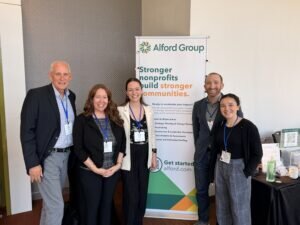
AFP Advancement NW 2026 – Left to Right: Greg Whitney, Mary Petersen, Mariah Hickey, Jaron Bernstein, Frances Jacobson
What surprised me was watching that same dynamic among the colleagues I attended with. These are experienced fundraising professionals, and yet they too were encountering new ideas, asking questions, turning concepts over in conversation. Seeing that wasn’t deflating, it was clarifying. This is just what the work looks like. Growth isn’t something you finish. It’s something you keep doing alongside people who are doing the same thing.
AFP Advancement Northwest’s conference also offered something ICON couldn’t in quite the same way: intimacy. As a regional conference, the room was smaller, the conversations more grounded and the connections more immediate. These are people working in the same geographic context, navigating similar landscapes and excited to learn from those around them. And crucially, they’re accessible, not just for a few days at a conference, but going forward as colleagues and community. What also struck me was how individualized everyone’s journey was. Despite shared professional identities, each person brought a distinct background, set of experiences and perspectives. They didn’t always agree, and that was okay. It was a good reminder that you can learn from others while still trusting what your own experience has taught you. Both things are true and holding them together is part of what it means to keep growing.
An Ongoing Commitment
Professional development isn’t a destination. It’s not something you do once and carry forward indefinitely. It’s an ongoing practice of staying curious, staying connected and staying honest about what’s working and what isn’t.
For organizations, that means building cultures where learning is valued, where staff are given the time and resources to engage with their professional communities and where the question what does the research say? is as common as what have we always done?
For those of us in consulting, it means showing up to these spaces not just to absorb, but to contribute. It means walking into a room as a newcomer, finding your footing and then coming back, with more context, more questions and more to offer. And it means bringing what we learn back into the work we do alongside the organizations we serve.
We are all, at every stage, learning forward.
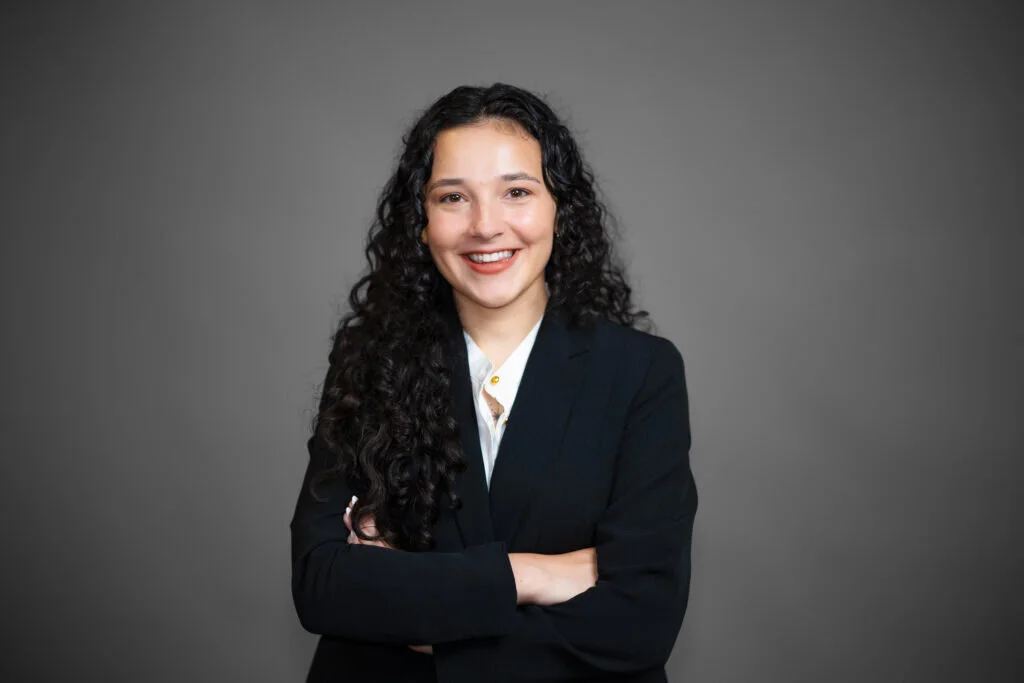
Frances Jacobson
Consultant, Alford Group
Frances Jacobson, MBA, is passionate about bridging the gap between data and impact, helping organizations make smarter decisions for the communities they serve. Prior to joining Alford Group, she built experience across the public, nonprofit, and private sectors, bringing both analytical rigor and a people-first approach to every engagement.