

If You’ve Seen One Board, You’ve Seen One Board: Why Governance Has No Single Blueprint
Over the past 18 months, social impact organizations across the sector have increasingly turned their focus inward to evaluate and maximize one of their most valuable assets: their board of directors. Driven by a desire to future-proof their missions, fuel sustainable growth and elevate governance, a growing number of institutions are turning to peer benchmarking to uncover what makes a board high-performing. Yet, while organizations often equate high performance with adopting industry “best practices,” true governance excellence is not found in a standardized template. While baseline practices provide essential fiduciary scaffolding, a truly high-performing board requires an intentional, fit-for-purpose alignment tailored to an organization’s unique culture, strategic life cycle and future direction.

When organizations think about board development, the first question is often, what are other organizations doing?
It’s a natural place to start. Benchmarking offers valuable perspectives, introduces new ideas, validates existing practices and helps organizations identify opportunities for improvement.
Throughout our work in studying governance models across a variety of nonprofit organizations, we have realized one certainty:
There is no single blueprint for a high-performing board.
The goal isn’t to build the same board everyone else has. It’s to build the board your organization needs next.
Are We Building Boards for Yesterday… or Tomorrow?
Once we stopped searching for a universal model of effective governance, a different question emerged: Are organizations intentionally building the boards they’ll need in the future, or simply preserving the boards they’ve always had?
Boards often evolve gradually. New members replace outgoing members, committees continue year after year, and governance practices become familiar simply because they’ve always existed.
However, sometimes in opposition, nonprofit organizations themselves are changing rapidly. Fundraising strategies are evolving. Technology is transforming operations and engagement. Community expectations are shifting. New leadership priorities emerge. Strategic plans change.
The question, then, is whether our boards are evolving alongside our organizations.
That doesn’t necessarily mean abandoning long-standing governance practices or institutional knowledge. In fact, continuity is often one of a board’s greatest strengths. But effective governance also requires periodically asking whether today’s board is equipped for tomorrow’s challenges.
As organizations think about board recruitment, committee structures, meeting design and board engagement, the goal shouldn’t simply be maintaining what has worked. It should be intentionally building the board the organization will need in the years ahead.
Interestingly, while every organization approaches governance differently, the strongest boards share one common characteristic: They are intentional. Rather than allowing governance structures to evolve by default, high performing boards regularly evaluate whether board size, recruitment practices, committee structures, meeting design and member expectations still aligned with where the organization was headed.

If You’ve Seen One Board…
One of the greatest lessons from our benchmarking work is the sheer difficulty in defining a “best” board.
Some organizations had highly engaged committees that carried much of the board’s work between meetings. Others relied on a more strategic, board-at-large model. Some emphasized fundraising expectations, while others focused on community leadership, advocacy or subject-matter expertise. Every board had areas where it excelled – and areas where it was actively working to improve.
No organization had governance completely figured out. Every board, regardless of its size or sophistication, was actively working through challenges. The differences weren’t signs that one board was succeeding while another was failing; they reflected organizations solving different governance challenges at different points in their evolution.
The more boards we examined, the more obvious one truth became:
If you’ve seen one board, you’ve seen one board.
Every governance structure reflected the organizations’ history, mission, culture, leadership and strategic priorities. Practices that were highly effective in one organization would not necessarily translate successfully to another.
Rather than asking, “Which board is doing it right?” we found ourselves asking a different question:
Why does this approach work for this organization?
That shift in perspective changed the purpose of benchmarking. Instead of searching for a single model to replicate or best practice to follow, benchmarking became an opportunity to better understand the many ways effective governance can look.
While there was no single governance model to emulate, there were clear patterns in the questions organizations were asking themselves. How do we recruit the expertise we’ll need tomorrow, not just the relationships we have today? How do we create meetings that encourage meaningful discussion instead of passive reporting? How do we hold board members accountable in ways that are supportive, transparent and aligned with expectations? The answers varied, but the willingness to ask those questions was remarkably consistent.

Benchmarking is About Learning, Not Copying
Perhaps the greatest value of benchmarking isn’t finding the answer; it’s discovering there are many possible answers.
Looking across organizations reminds us that governance is not one-size-fits-all. It challenges assumptions about how boards “should” be structured and encourages organizations to think more intentionally about their own governance practices.
Our benchmarking also revealed several broader trends shaping nonprofit governance. Organizations were increasingly redesigning board meetings to prioritize strategic dialogue over staff presentations by relying on robust pre-reads and committee work.
Recruitment was becoming more intentional, with some organizations broadening how they identified future board members to ensure the skills and perspectives around the table reflected future needs rather than historical relationships. Board evaluations were also becoming more structured, incorporating objective measures such as attendance, committee participation and engagement.
Although these practices looked different from organization to organization, they reflected a shared commitment to continuous improvement rather than maintaining the status quo.
Sometimes benchmarking validates the direction an organization is already taking. Other times it sparks new ideas or reveals opportunities to approach familiar challenges differently.
One finding stood out as particularly universal: regardless of organizational size, mission, or governance structure, nearly every institution identified activating board members’ networks and fundraising engagement as an ongoing opportunity. It served as a valuable reminder that even the most successful boards are continually refining their practices. Benchmarking didn’t reveal perfect boards; it revealed organizations committed to getting better.
But its greatest contribution may simply be giving boards permission to stop asking, “what is everyone else doing?” and start asking, “what will help our organization thrive?”
That question often leads to much more meaningful conversations.
Building the Board Your Organization Needs
The future of nonprofit governance won’t be defined by organizations adopting identical committee structures, recruitment models or board expectations.
Instead, it will be shaped by boards willing to continually assess whether their governance reflects the organization they are becoming, not just the organization they have been.
Benchmarking can be a valuable part of that process, not because it provides a checklist of best practices, but because it broadens our thinking. It reminds us that there is rarely one “right” way to build a board.
At the same time, our benchmarking reinforced that while governance models vary, the strongest boards share a common mindset. They are curious. They regularly evaluate whether their structures, expectations and practices continue to support the organization’s strategy. And they are willing to adapt when the answer is no.

The purpose of benchmarking is not to identify the board to emulate. It’s to become more intentional about designing the board your own organization will need in the future.
The organizations that will be best positioned for the future won’t necessarily be those with the most recognizable governance models. They’ll be the ones that remain curious, intentional and willing to evolve as their missions evolve.
Every board has a unique path to high performance. Start by benchmarking your own board with our Nonprofit Board Effectiveness Toolkit. And if your leadership team is ready to go deeper — refining meeting structures, activating engagement, or preparing governance for tomorrow’s challenges — Alford Group brings decades of sector-wide insights to guide your journey. Let’s connect to discover how we can help you unlock your board’s full potential.

Frances Jacobson
Consultant, Alford Group
Frances Jacobson, MBA, is passionate about bridging the gap between data and impact, helping organizations make smarter decisions for the communities they serve. Prior to joining Alford Group, she built experience across the public, nonprofit, and private sectors, bringing both analytical rigor and a people-first approach to every engagement.
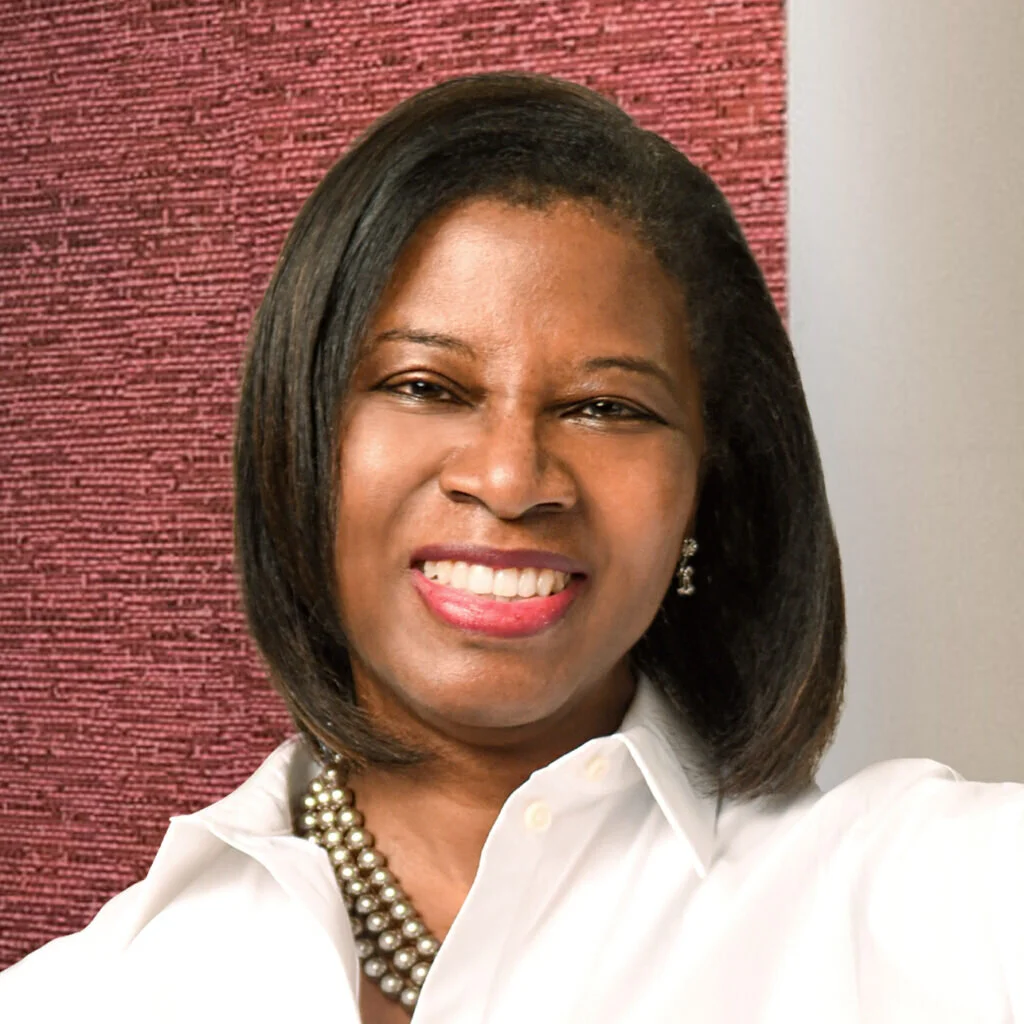
Brenda B. Asare
President & CEO, Alford Group
Brenda B. Asare joined Alford Group in 2004 and assumed the role of President & CEO in 2014. Brenda brings nearly 30 years of management experience across sectors. She has assisted clients in raising over $2 billion, focusing on campaign execution, strategic planning, corporate partnerships, board leadership development and organizational design.